Preview. These are real screens from the programme. Nothing you tap here is
saved, and you don't need an account to look.
Module 3 · Your brain on anxiety
Meet your brain bosses
Listen along
Meet your brain bosses · 35 sec
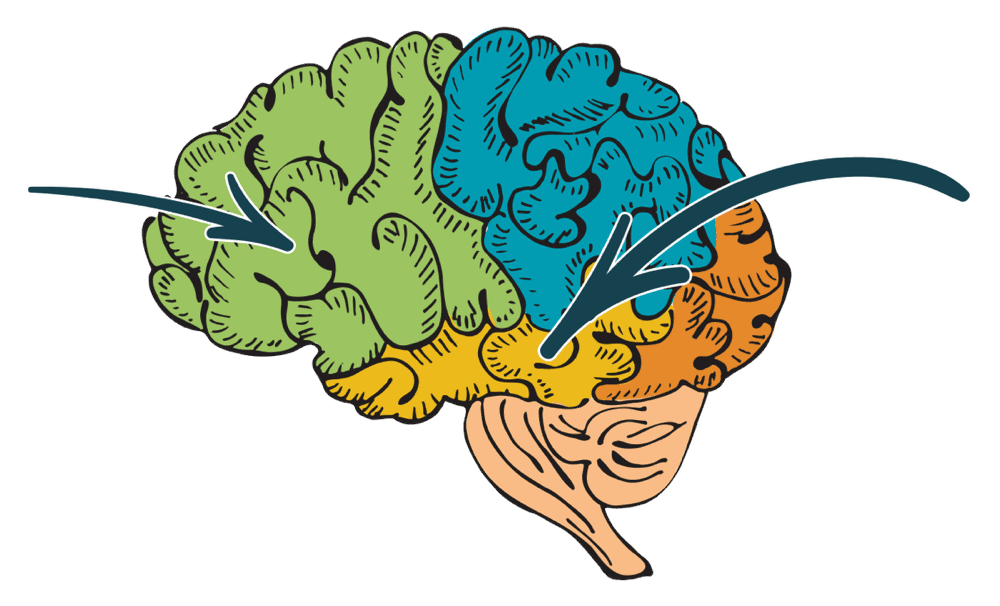
There's a part of your brain whose entire job is spotting danger, and it's fast. Twelve milliseconds fast, quicker than a blink. We call it the Guard Dog; scientists call it the amygdala. It kept your ancestors alive when the danger was actual tigers. The problem is, it can't tell the difference between a tiger and a maths test. Then there's your Thinking Brain, the prefrontal cortex, right behind your forehead. Slower, but smart: it plans, weighs things up, calms the rest of the brain down. Here's the bit that explains so much: when the Guard Dog barks loudly enough, the Thinking Brain partially goes offline. That's why you can't think straight when you're anxious. It's not you failing. It's wiring. Tap each part of the brain and it'll introduce itself.
A long time ago the dangers were actual tigers. Your brain still runs the
same alarm system, it just points it at tests and group chats now. Two parts of your brain
run the show, and they don't always agree.
Tap to explore
Tap a label, or a glowing spot, and that part of your brain will introduce itself.
Waiting for a tap... your brain bosses are ready to talk.
!
The bit that explains so much: when the Guard Dog is barking loudly, the
Thinking Brain can't do its job properly. That's why it's so hard to concentrate, stay calm
or make good choices when you're anxious. It's wiring, not weakness.
The Science
How fast is your Guard Dog, really?
Tap to flip
Your amygdala can detect a threat in 12 milliseconds: faster than you can blink. It evolved for tigers, but now it reacts to test results and social media too. Fast isn't the same as right.